Our future is among the stars
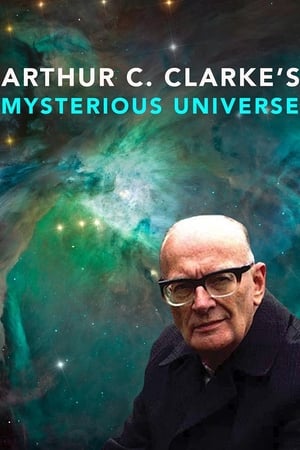
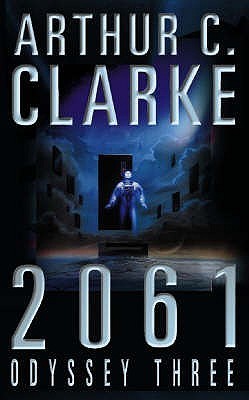
Arthur C. Clarke created a monumental work that has long been a classic and one of the pillars of modern science fiction. Interestingly, at first it was a script for a Stanley Kubrick film. The film performed well in the world, which led to the writing of a novel based on this screenplay. I would like to note right away that I have reviewed the film several times, and it did not respond much in my soul. Of course, I understand that the famous director's painting is one of the most important works in the genre of science fiction today, and many future significant works have been created on the basis of it. But for me, Space Odyssey is primarily a novel by Arthur C. Clarke, which allowed me to see the author's story from a different angle and feel it completely.
The book is written in a very interesting language. The unhurried narration immerses the reader in different historical moments: the times of primitive people, the world of the future. In each period of time described, people discover certain monoliths, which allow humanity to make peculiar leaps in its development. Each individual part tells about how people interact with each other, their ways of communication. Of particular interest, of course, is the team's journey on a spacecraft to the Jupiter satellite and its interaction with the HAL-9000 computer with artificial intelligence. This is one of the decorations of the work: the interaction of humans and AI, which continues on many pages. Clark offers his interesting vision of the coexistence of two different forms of life.
Another important theme of the work is interpersonal relationships in primitive society, which are described in no less interesting way. In the final third of the work, the writer demonstrates an essence beyond the human understanding, thereby summing up — the current man exists somewhere in the middle of his development and one day will be able to reach a completely different level, becoming something more than just a material being from planet Earth.
When the book ends, all the puzzles of the work come together, allowing us to draw conclusions about all the initially unclear events in the work. It opens up an understanding of what monoliths are, what the role of man is. The author forces readers to ask this question through the representation of his world, but he does not give a specific answer. After all, this topic is more from the field of philosophy. Hardly anyone would dare to give an exhaustive answer, especially seeing our changing world every day.
I especially like Clark's predictions about the future. After all, many of them have become a reality in our modern world: the victory of a computer over a human in a game of chess, tablet computers, the vertical landing of a rocket back to the planet, the discovery of new satellites of giant planets, and much more.
"Space Odyssey" will definitely be remembered for its unique narrative, interesting style and extraordinary representation of the past, present and future. At the same time, the book can make you reconsider the purpose of the existence of all mankind. Maybe it will even upset you by suggesting some solutions. Who are we? What do we exist for? Who created us and what is our mission? Sometimes, when you ask yourself these questions, you get very disappointed, because you see that most people, in pursuit of their happiness and existence, do not even ask such questions in principle, because they are overcome by much more mundane problems and difficulties, of which there have been many more in recent years: problems of mass diseases, wars, famine, etc. many others. And Clark is trying to remind us all in his work that behind these complexities, what humanity creates for itself through individuals and possibly unsuccessful experiments, there is a much larger world that one day must submit to people, if only it is worthy of it.
9 out of 10