







The Thief of Bagdad(1940)
ONE THOUSAND AND ONE SIGHTS FROM THE THOUSAND OF ONE NIGHTS....
Imdb
7.40
16K VotesTmdb
7.10
302 VotesViewings
No viewings yet. Add one to start tracking.
When Prince Ahmad is blinded and cast out of Bagdad by the nefarious Jaffar, he joins forces with the scrappy thief Abu to win back his royal place, as well as the heart of a beautiful princess.
Where to watch

Infos
Runtime
107 minutes
107 minutes
Directed by
Michael PowellLudwig BergerTim Whelan
Michael PowellLudwig BergerTim Whelan
Written by
Miles Malleson
Miles Malleson
People Finished
5
5
Release Status
Finished
Finished
Release Date
2/19/1940
2/19/1940
Original Language
English
English
Origin Country
United Kingdom
United States
Cast
Recommended Titles
Reviews
aleks-predator
7 months ago
7
A Fairy Tale with Three Oscars
"The Thief of Bagdad" is undoubtedly one of the landmark films of its time. The picture captures the magic of the Middle East and creates a memorable visual style that fascinates with its beauty. It is especially interesting to watch from a modern perspective, constantly wondering how certain effects and scenes were achieved on screen.
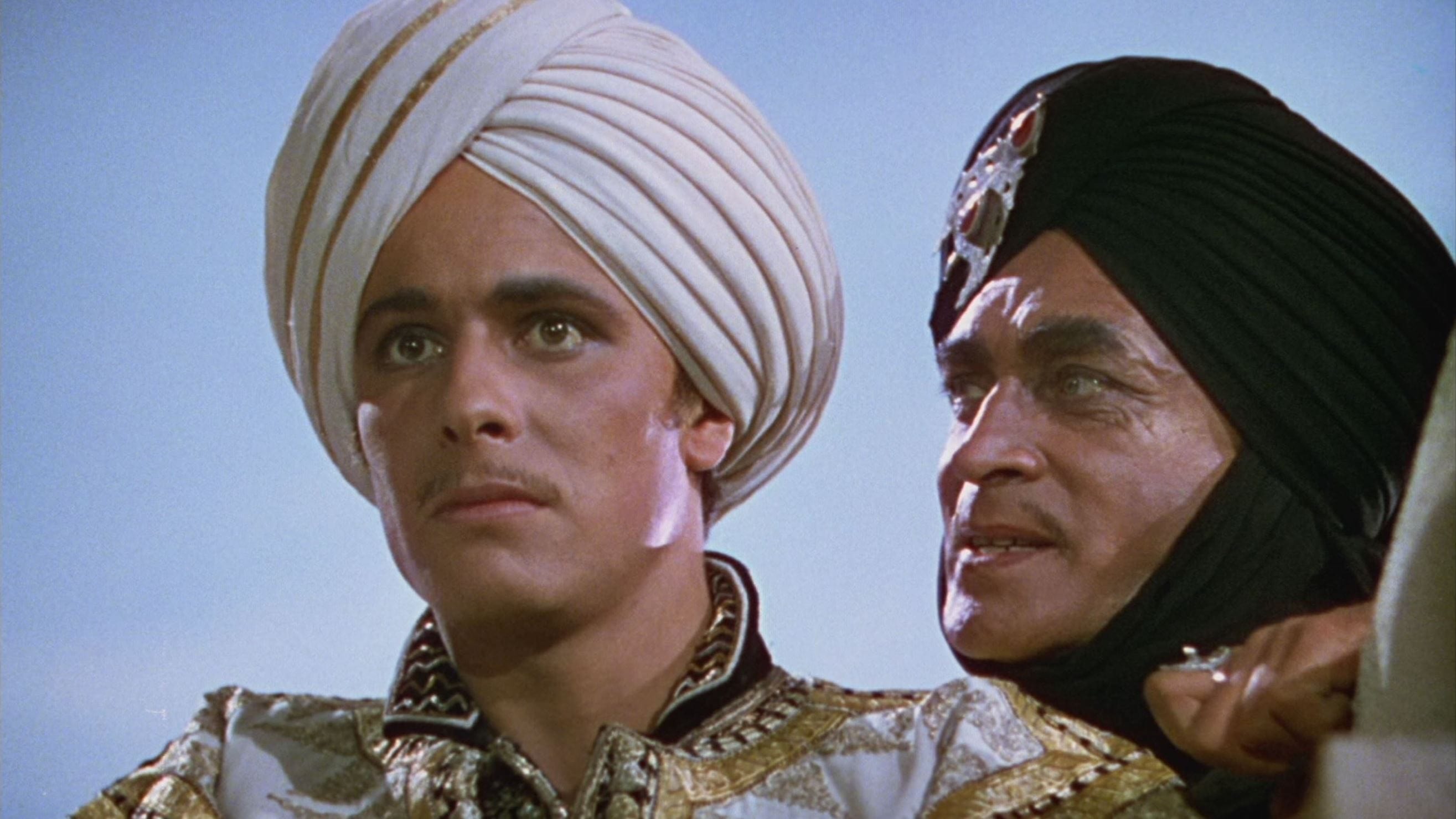
One of the film’s strongest aspects is its visual execution. "The Thief of Bagdad" is a vibrant spectacle of color, where every scene and every frame seems designed to introduce even an uninitiated viewer to the world of the East. The exotic locations, costumes, and set designs all work remarkably well.
The screenplay also deserves special mention. This Baghdadian tale is filled with intrigue, fairy-tale romance, and, of course, adventure. Ruler Ahmad decides to disguise himself as a commoner and wander through the streets of his city to learn how ordinary people live. He is persuaded into this ill-considered decision by the sorcerer Jaffar. Naturally, Jaffar betrays his master, which leads to imprisonment and preparations for execution. From there, all the characters are swept into a series of captivating adventures.
Conrad Veidt does a fine job portraying the cunning and malevolent Jaffar, while John Justin gives a solid performance as the naïve Sultan Ahmad. The other actors are strong as well. I would especially highlight Sabu Dastagir and June Duprez—each is well cast in their respective role.
This film delights with its aesthetic qualities and leaves a positive impression—at least it did for me. It won three Academy Awards, including for Best Special Effects, Best Cinematography (Color), and Best Art Direction (Color). Even now, in the twenty-first century, "The Thief of Bagdad" still holds up well, in my opinion—of course, taking into account the year of its release. It is a rich and colorful story that, I believe, can still find its audience today.
7 out of 10