





Scream(1996)
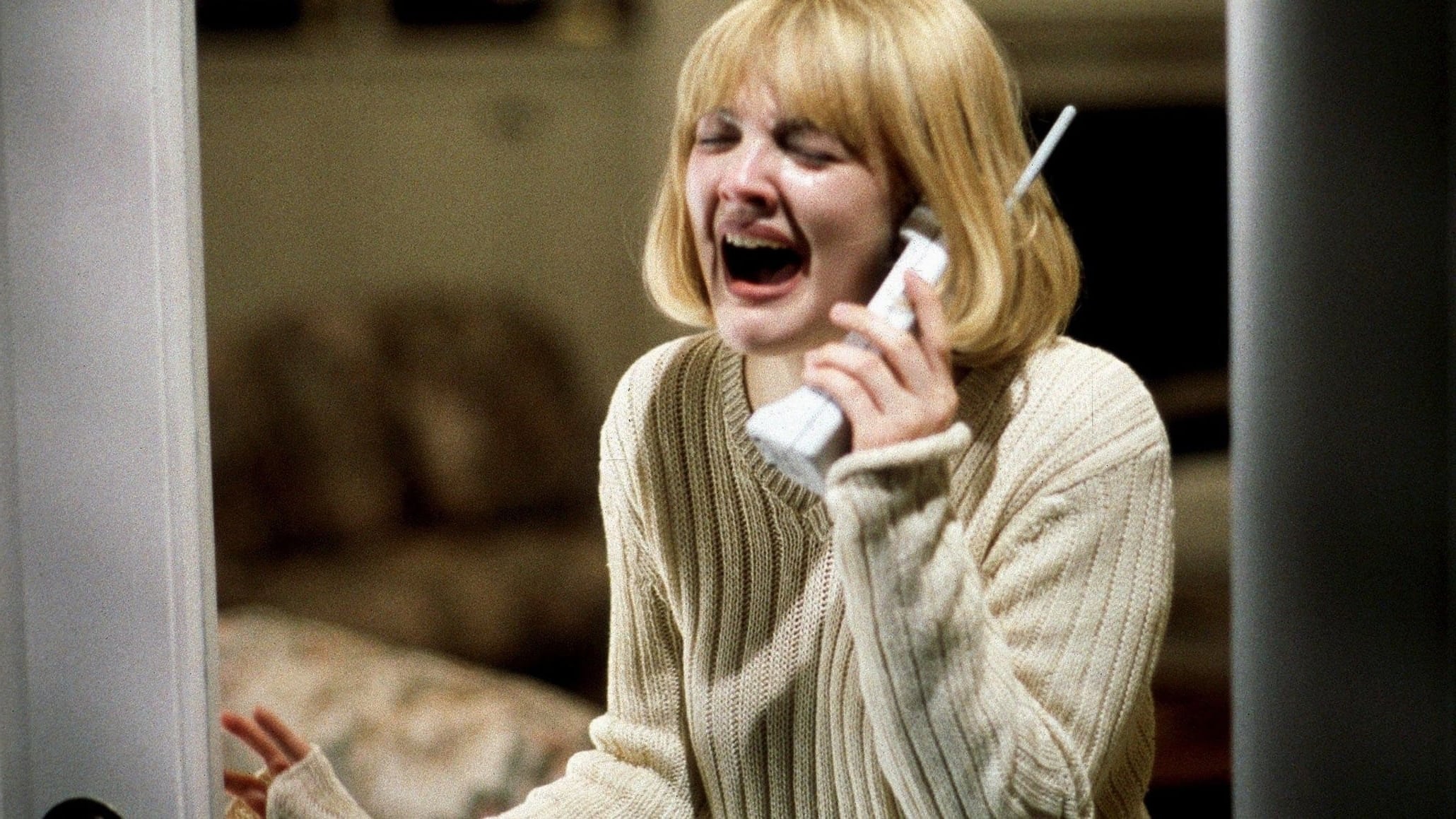
Someone has taken their love of scary movies one step too far. Solving this mystery is going to be murder.
Imdb
7.50
458K VotesTmdb
7.44
8.4K VotesViewings
No viewings yet. Add one to start tracking.
A year after the murder of her mother, a teenage girl is terrorized by a masked killer who targets her and her friends by using scary movies as part of a deadly game.
Where to watch

Infos
Runtime
112 minutes
112 minutes
Directed by
Wes Craven
Wes Craven
Written by
Kevin Williamson
Kevin Williamson
People Interested
8
8
People Finished
221
221
Release Status
Finished
Finished
Release Date
12/20/1996
12/20/1996
Original Language
English
English
Origin Country
United States
Cast
Recommended Titles
Reviews

Zach
10 months ago
8
I'm not much one for slashers, but this one for sure holds up. It has some great meta commentary while also being effective in it's own horror.
aleks-predator
about 1 month ago
9
Deconstruction of Fear: How Scream Changed the Horror Genre
In 1996, Wes Craven made not another slasher, of which there were plenty around. He made a film that immediately became a landmark in the history of the genre. "Scream" is a thriller that knows it is a thriller. A film where the characters read the genre rules out loud, break them themselves, and pay the price. It is a film where every step is not ordinary fear, but a commentary on fear itself. And at the same time, "Scream" remains a genuinely frightening, vivid, and intriguing spectacle.
The plot is simple, but effective. Before the viewer is a provincial town that is shaken by a series of brutal murders. At the center of the events is high school student Sidney Prescott, who is being pursued by a mysterious killer in a black-and-white mask that has already become a visual emblem of an entire generation. But the killer is not some silent psychopath who simply walks around, breathes into a mask, and takes out schoolchildren in batches because they happened to be in the wrong place at the wrong time. This killer is a fan of the genre, playing the game by his own rules: phone calls, tests of movie knowledge, psychological pressure. This is a completely different kind of character for the genre. And behind all of this, on top of that, there is a well-thought-out structure in which the past constantly returns to “bite you in the ass.”
The cast was chosen with an eye toward an effective combination of youth and recognizability. Neve Campbell as Sidney creates a convincing image of a girl who is forced to grow up against a backdrop of horror. Her character does not only run, but also fights back, becomes tougher, while still retaining her inner teenage vulnerability. Courteney Cox appears with unexpected energy. The actress does an excellent job playing reporter Gale Weathers — not the most pleasant journalist in the history of cinema, but honest and ironic. David Arquette as the simple-minded police officer Dewey adds the necessary touch of warmth to the film. And, of course, the antagonist cannot be left unmentioned: his movements, voice (in the original — the voice of Roger L. Jackson), psychological provocations — all of this works to create real fear. The other performances are good too: Skeet Ulrich, Matthew Lillard, Jamie Kennedy, Rose McGowan, and Drew Barrymore.
But the main thing about "Scream" is not the plot, but how it is told. It is not just a horror film, but a meta-horror. The characters seriously discuss the rules of survival in slashers, refer to the famous "Halloween" and "Friday the 13th", and still end up caught in the trap of the same clichés. On the one hand, it is funny, and on the other — it is terrifying as hell. Kevin Williamson wrote the screenplay with deep knowledge of the genre and obvious love for it. This work is full of references, jokes, reinterpretations, but at the same time it does not lose its tension. Here you can laugh at the genre, but still flinch at every phone call.
From a technical point of view, the film is made exceptionally well. Cinematographer Mark Irwin and editor Patrick Lussier provide a tight rhythm. The camera does not dart around, the shots are carefully composed, the suspense is built on pauses and looks, rather than cheap jump scares, of which there are tons in some other projects. Marco Beltrami's music (the legendary title melody, by the way, personally for me, heartbreaking and in some way apocalyptic if you find yourself in the world of "Scream") emphasizes the atmosphere of anxiety, while the selection of songs from that era adds the necessary youthful vibe to the film.
"Scream" became an important point in Craven's career, once again confirming his ability to feel the pulse of the genre. After decades, slashers got stuck in repetitions, and Scream pulled them out of the swamp. Yes, sequels followed it. Successful and not so successful. But the first film is exactly what remains the foundation on which an entire school of imitators was later built. At the same time, the film never seemed secondary to me. Rather, it is a smart and even mischievous retelling of the classics, but with a modern view.
The film received recognition not only from viewers, but also from critics. There is the Saturn Award for Best Horror Film, MTV awards, and an award for Neve Campbell. All of this cemented Scream's status as a phenomenon.
For me, "Scream" has always been an important film, a work that showed that horror movies can be smart, dynamic, and at the same time self-ironic. The film intrigued me, pleased me with its direction, interesting characters, and the mystery of who was hiding behind the Ghostface mask. It was not an ordinary teenage thriller. "Scream" acted as a real commentary on the genre, which at the moment of its release redefined how modern horror should work.
And even decades later, it has not lost its edge. The film still scares, sometimes makes you laugh, and definitely intrigues you. And it still reminds you: if you hear a phone ringing and someone on the other end asks — “What is your favorite scary movie?” — you better not get the answer wrong.
9 out of 10